9 min read

Published
June 24, 2026
Digital Product Talks #35: AI in Customer Service is a Brand Decision

Felix
Co-Founder & Managing Director

You reach out to customer service to resolve an issue, but a bot picks up instead of a person. Probably you feel slightly annoyed, because you'd prefer a real person to help you, right? And then, even worse, the AI doesn’t even help you with your problem! At that point, you’re probably more than annoyed, right? Not only did you not get what you wanted, but you also wasted time.
Every one of those interactions is your brand meeting a customer at the exact moment something's gone wrong. So why is it that most companies treat their most personal touchpoint as a place to cut costs and save money?
I dug into this on the latest Digital Product Talks with Sven Beiling, who runs technology and AI strategy at Ströer X. He oversees customer service for more than 100 clients with around 7,500 agents worldwide, so when he says something isn't working yet, that's from someone who's an inside source.
Sven splits AI in customer service into three categories:
Most of the discourse about AI in customer service is in that first category, and most of the money follows the same logic, chasing wherever the biggest savings are.
But let’s zoom out what a brand really is. It’s not merely a set of colors or a specific design, it’s what’s happening in that interaction between you, the end user, and the product. So I asked Sven one thing I really wanted to know: has he ever seen AI make an interaction feel more like the brand behind it? A use case where the automation strengthened the relationship instead of just clearing the queue?
As you might assume, he hadn't. He'd been part of hundreds of projects, but couldn't point to a single one that had improved the user experience. But that's not a gap in his work; it's a gap in the whole market, waiting there for someone to take advantage of it.
"Right now it's more damage control than actively seizing the opportunity." Sven Beiling, Chief Digital Officer at Ströer X
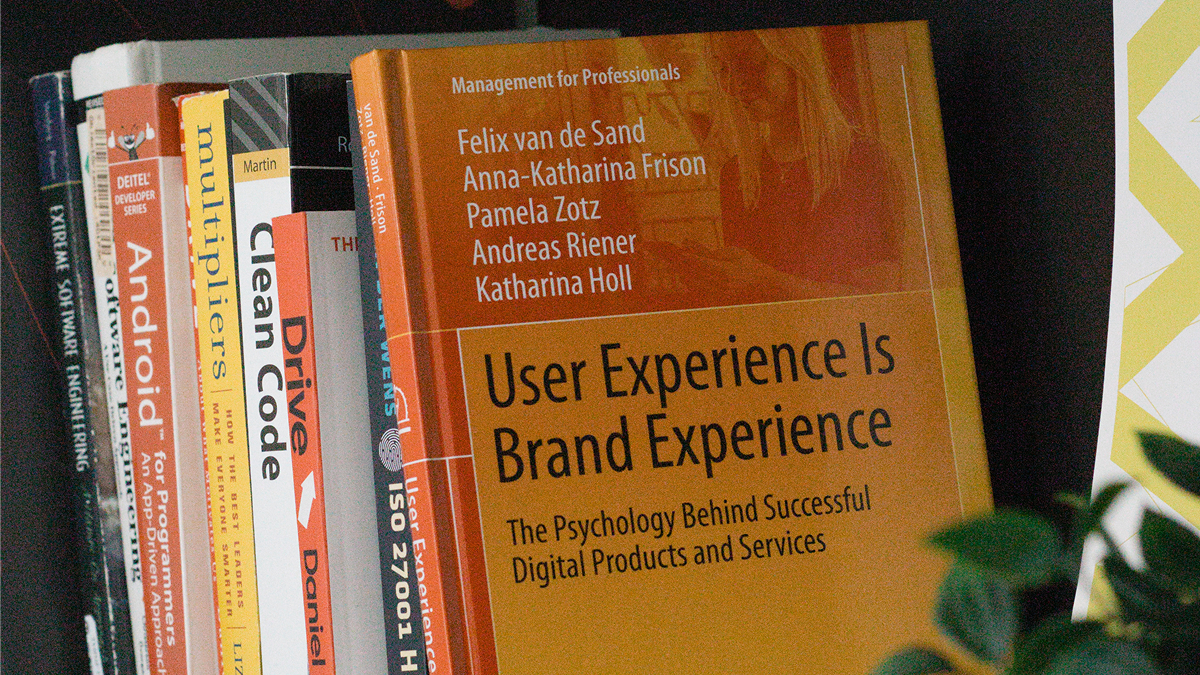
In UX, we split quality into two kinds. We can also apply this to the customer service experience and AI. Pragmatic quality is whether the thing actually works: can the customer get their problem solved, fast? Is the right data there when it's needed? Hedonic quality is how it feels: does talking to the bot feel like talking to your company?
So many systems botch the basics that just getting the pragmatic layer right still impresses people. For example, the tech for giving your brand a voice (an actual human-like voice) exists, through apps such as ElevenLabs, where you can build a corporate voice that sounds just like you. But very few companies bother because of the extra costs and effort required.
Doing it half-heartedly is worse than not doing it at all. When Sven’s team built a voicebot for the airline Eurowings, they encountered a problem during testing. When asked, "Can I bring my dog?", the bot gave the correct answer: Yes, in a ventilated bag that fits under the seat in front of you. But somewhere a training document defined "small animal" as "dog or cat", and for some reason the model decided a hamster qualified too. So when someone asked "Can I bring my hamster?", the first version of the bot said: Sure, pop it in the same ventilated bag.
Yeah, only if you want your hamster to disappear forever. Or for you to be barred from boarding the plane in the first place, right?
.gif)
The lesson Sven took from this is that you only get a brand-consistent answer from disciplined content, clean data, and a process someone actually thought through. AI can make mistakes, and it won't think for you.
The biggest misconception, in his words, is that it's all quick and easy. The work of understanding your customer's situation and feeding the system the right knowledge is the same hard work it's always been. It's just that the front end looks different now.
There's one big change nowadays that’s very important to mention, that really affects how you approach the whole process. Sven mapped where customer service begins today and found it starts a step earlier than it used to. People don't open your FAQ, or whatever guide you've prepared for them; they ask ChatGPT, Claude, or Perplexity, and show up already half-briefed by an answer you didn't write.
But soon their assistant won't just brief them, it'll act for them. Sven's convinced, and so am I, that we're heading for agents talking to agents: your customer's bot booking a trip or querying an energy bill directly with yours. Perplexity already lets you pay through it, so a customer can have zero direct contact with the brand behind the purchase. Robots talking to robots, booking trips for you, is probably not how anyone imagined the future, right?
So if the interaction layer is increasingly run by AI on both sides, the brands that have deliberately decided how they show up will stand out among a sea of generic-sounding brands you forget the moment you stop interacting with them.
A few things worth taking from Sven and the conversation:
If you decide to implement AI in customer service simply to save costs, a portion of your customers will definitely end up running into a wall that cannot resolve their issue, and the reputation your brand gets stuck with will likely be "cheap". Customer service is where you interact with your customers, and giving them an AI to speak to screams you don't care about them. But if you’re really keen on implementing AI in that process, then think about where it would actually benefit your customers.
Translating what a brand means into how a product behaves is the thing we do at COBE, with our User Experience Identity method. If brand-consistent AI customer service is the problem on your desk right now, we're happy to help you.
Want to hear the full conversation with Sven Beiling? Listen to the episode on the Digital Product Talks podcast on Spotify or Apple Podcasts.
In a rush? Worry not, we’ve prepared a quick summary for you.
Should you use AI in customer service? Yes, but not to cut costs. AI works when it solves the customer's problem faster and still sounds like your brand.
Does AI in customer service hurt your brand? Yes, it can. If you deploy it purely to save money, customers hit walls that can't help them and your brand gets tagged as "cheap".
How do you keep an AI customer service bot on-brand? Brand-consistent answers come from disciplined content, clean training data, and a process someone actually thought through.
Where do customers start a support journey now? Earlier than they used to. Instead of opening your FAQ, people ask ChatGPT, Claude, or Perplexity first and arrive already half-briefed by an answer you didn't write.
Felix is the CEO and one of the co-founders of COBE always looking for ways to make the world a little more beautiful.